
Travel Guide
Shali Fortress Siwa: Complete Visitor Guide (History, Entrance Fee & Tips)
10 min read
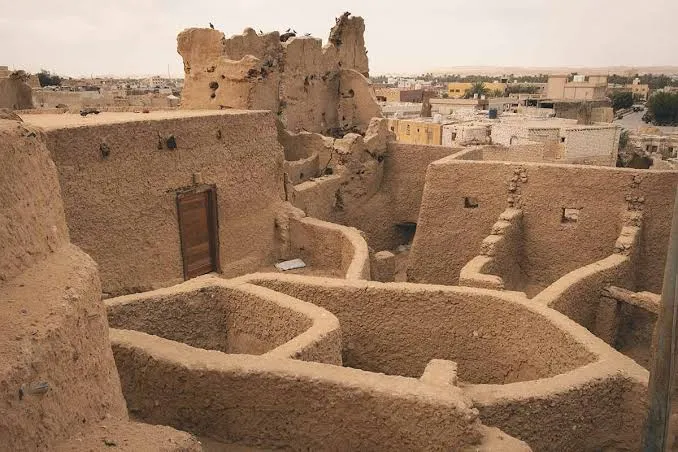
Quick Facts: Shali Fortress at a Glance
|
Detail |
Information |
|
Entrance fee |
Free — no ticket booth, no admission charge |
|
Opening hours |
Open access, no official gates or fixed hours; best
visited in daylight for safety |
|
Time needed |
30–60 minutes to explore and reach the upper viewpoint |
|
Best time to visit |
Late afternoon, 1–2 hours before sunset, for light and
cooler temperatures |
|
Location |
Town center of Siwa, opposite El Souq Square, behind
Albabenshal Hotel |
|
Access point |
Narrow alley beside Albabenshal Hotel, through a small
handicraft bazaar |
|
Footwear |
Closed, sturdy walking shoes — surfaces are uneven and
steps are worn |
|
Best season |
October–April; avoid midday visits June–August |
The History of Shali Fortress
Shali
means ‘city’ in the local Siwi language, and for centuries it was Siwa's only
town. Construction began around 1203 AD, and the settlement grew upward rather
than outward, eventually reaching four to five storeys in places, packed with
homes, storage rooms, and a mosque, all connected by covered passages.
The
design served a defensive purpose. Siwa's isolation in the Western Desert made
it a target for raids, so the community built a single, densely walled
settlement on raised ground, with narrow winding alleys that were easy to
defend and hard for outsiders to navigate. For most of its history, few
visitors were ever allowed inside.
Shali's
decline came suddenly rather than gradually. In 1926, three days of unusually
heavy rain badly damaged the kershef buildings, since the material dissolves
when repeatedly soaked. Families began moving into newer, more comfortable
houses built around the old fortress, and Shali was largely abandoned within a
generation. Only a handful of structures near its edges are still in occasional
use today, mostly for storage.
More
recently, a joint restoration effort between the European Union and the
Egyptian environmental organization EQI (Environmental Quality International),
which began around 2018, has worked to stabilize sections of the ruins and
reopen parts of the fortress that had been unsafe to enter. This is a detail
most visitor guides leave out, but it explains why parts of Shali feel newly
walkable while others remain clearly fragile.
Kershef: The Building Material That Shaped Siwa
Kershef
is a mixture of local salt-rock, taken from the beds of Siwa's salt lakes,
combined with clay and mud. Builders shaped it into thick, rounded walls that
insulated homes against the desert's extreme temperature swings, keeping
interiors cooler by day and warmer at night.
The
same material that made Shali possible is also why it eroded so quickly. Salt
and mud construction performs well in a dry climate but breaks down fast when
exposed to sustained moisture, which is exactly what happened during the 1926
rains. Walking through the ruins today, you can still see salt crystals
embedded in the walls, along with animal bone fragments that were mixed in for
structural strength a small but striking
detail worth pointing out if you're visiting with a guide.
What You'll See Inside the Fortress
•
The
Old Mosque – the only fully intact original structure, recognizable by its
distinctive chimney-shaped minaret and dated to the fortress's founding period.
•
Winding
alleyways – narrow, shaded passages that connected homes and storage rooms;
some sections are walkable, others are roped off for safety.
•
The
upper viewpoint – a short climb over the settlement's slumped remains leads to
panoramic views across Siwa's palm groves, agricultural land, and the
surrounding desert.
•
A
small bazaar at the entrance – local vendors selling salt lamps, embroidered
Siwan textiles, and silverwork, often at better prices than the main town
market.
The
contrast between the earth-toned ruins and the green oasis below is what makes
Shali one of the most photographed spots in Siwa, particularly from the higher
points in the late afternoon.
How to Get to Shali Fortress
Shali
sits directly in the center of Siwa town, opposite El Souq Square, so if you're
staying anywhere near downtown you can walk there in a few minutes. There's no
official ticket gate or signposted entrance look for a narrow alley to the
right of Albabenshal Hotel, which leads through the small bazaar and up a set
of stone steps into the fortress.
If
you're arriving from Cairo, Siwa is roughly 800 kilometers away via the
Alexandria–Matrouh road, typically an 8–9 hour drive. On our 3-day and 4-day
Siwa Oasis tours, this is built into day one, with the fortress visit scheduled
for the following morning once you've settled into your hotel.
Best Time to Visit and Photography Tips
October
to April is the most comfortable window, with mild days and cool evenings.
Visiting in the late afternoon, roughly one to two hours before sunset, gives
you softer light on the kershef walls and a cooler climb to the upper
viewpoint. Sunset itself is when Shali is at its most photogenic, as the warm
light picks out the texture of the ruins against the green of the oasis.
If
you're visiting between June and August, plan for early morning or early
evening only midday heat in Siwa regularly exceeds 40°C, and there's very
little shade inside the fortress.
Safety Notes
Shali
is a genuine ruin, not a restored museum piece, and some sections remain
structurally unstable. Stick to the marked paths and steps, wear closed shoes
with good grip, and avoid climbing on walls or ledges outside the designated
route, even where local kids offer shortcuts. If you're visiting independently
rather than with a guide, it's worth asking your hotel which sections are
currently open, since restoration work is ongoing in parts of the site.
What You Can Do at Shali Fortress
•
Climb
to the upper viewpoint for panoramic views over Siwa's palm groves,
agricultural fields, and the desert beyond the single best reason to visit.
•
Walk
the surviving alleyways and narrow passages that once connected hundreds of
mud-brick homes, storage rooms, and communal spaces.
•
Visit
the Old Mosque, the only fully intact original structure, recognizable by its
chimney-shaped minaret.
•
Shop
at the small bazaar near the entrance for salt lamps, embroidered Siwan
textiles, and silver jewelry often better priced than the main town market.
•
Time
your visit for sunset, when the low light picks out the texture of the kershef
walls against the green of the oasis.
•
Look
closely at the walls themselves eroded
sections reveal salt crystals and animal-bone fragments that were mixed into
the original construction for strength.
Thirty
to sixty minutes is enough to cover the main routes and reach the top, though
it's easy to linger longer around sunset.
Combine Shali With the Rest of Siwa
Shali
is usually the first stop on a Siwa itinerary, since it's centrally located and
works well in the morning or at sunset. Most travelers pair it with:
•
The
Oracle Temple of Amun, where Alexander the Great is said to have sought
confirmation of his rule
•
Cleopatra's
Spring (Ain Cleopatra), a natural pool used for swimming
•
Gebel
al-Mawta (Mountain of the Dead), a hillside necropolis with rock-cut tombs
•
The
Great Sand Sea, for an afternoon of dune safari and sandboarding
Our
3-Day Siwa Oasis Tour and 4-Day Siwa Oasis Tour both build Shali Fortress into
day one or two, alongside these sites, with a private vehicle from Cairo and a
guide who can point out details like the
bone fragments in the walls or the current state of the restoration that are easy to miss on your own.
How to Get to Shali Fortress From Cairo
Shali
sits in the middle of Siwa town, so once you're in Siwa itself it's a short
walk from almost any hotel. Getting from Cairo to Siwa is the real logistics
question, and there are three practical ways to do it:
|
Option |
Details |
|
Private car / guided tour |
8–9 hours via the Alexandria–Matrouh road, roughly 750–800
km. The most comfortable option and the one built into our 3-day and 4-day
Siwa tours. |
|
Public bus (West Delta Bus Co.) |
Direct departures from Cairo's West Delta bus terminal.
Fare roughly 450–600 EGP one-way; journey takes 8–9 hours. |
|
Flight + ground transfer |
Domestic flight Cairo–Marsa Matrouh, then a 4–5 hour bus
or private car onward to Siwa. Faster in the air but adds a connection and
cost. |
|
Best time to travel |
October to April. Midday heat in summer regularly passes
40°C on the drive and in the fortress itself. |
Why Shali Fortress Is Different From Anything Else in Egypt
Most
of Egypt's famous monuments are built from carved stone and designed to last
for millennia. Shali is the opposite: built from kershef, a mixture of local
salt and mud, it was never meant to be permanent architecture in that sense it
was a living, working town, shaped by the people who needed shelter from both
raiders and the desert climate.
That's
also what makes it fragile. A single period of heavy rain in 1926 did more
damage to Shali than centuries of attempted invasions, and much of what stands
today is a ruin actively being stabilized through an EU and Environmental
Quality International restoration project that began around 2018 a detail most visitor guides leave out, but
one that explains why some sections feel newly walkable while others are still
clearly crumbling.
It's
also one of the only places in Egypt where you can see, firsthand, how Berber
(Siwi) culture shaped an entire settlement the language, the building
techniques, and the layout of the town are unrelated to anything else in the
Nile Valley or the Red Sea coast. Combined with the free entry, open access,
and unmatched sunset views over the oasis, Shali offers a kind of authentic,
undercrowded historical experience that's increasingly rare in Egypt's more
visited sites.
"Plan Your Visit Shali Fortress is included as a core stop on both our 3-Day Siwa Oasis Tour and 4-Day Siwa Oasis Tour from Cairo, timed for the best light and paired with the rest of Siwa's key sites. "
Frequently Asked Questions
Is Shali Fortress free
to enter?
Yes.
There is no ticket booth or admission fee. The site is open and accessible from
a narrow alley near Albabenshal Hotel.
How old is Shali
Fortress?
Construction
is generally dated to around 1203 AD, making the fortress roughly 800 years
old.
Can you go inside
Shali Fortress?
Yes,
visitors can walk through several of the surviving passages and climb to an
upper viewpoint. Some sections remain closed for safety due to ongoing
restoration.