
Travel Guide
Who Built the Pyramid of Menkaure? Unveiling the Secrets of Giza’s Third Monument
6 min read
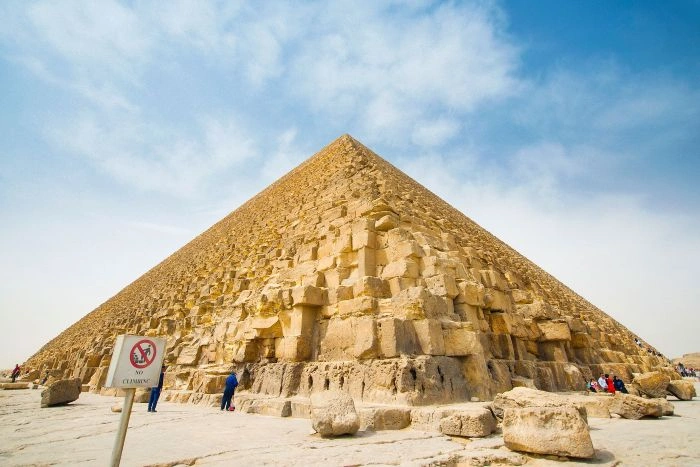
History of the Pyramid of Menkaure
The Pyramid of Menkaure was commissioned by Pharaoh Menkaure, a ruler of the Old Kingdom's Fourth Dynasty, believed to have reigned around 2500 BC. As the grandson of Khufu and the successor to Khafre, Menkaure inherited a plateau that was already crowded with the architectural egos of his ancestors. History records his reign as one of relative stability but also one of significant change. Unlike the soaring heights of his predecessors, Menkaure’s choice to build a smaller pyramid was not necessarily a sign of diminished power, but rather a reflection of evolving religious priorities and, perhaps, the exhaustion of the state’s resources following the intense construction cycles of the previous two generations.
How Was the Pyramid of Menkaure Built?
The construction techniques used for this pyramid mark a distinct departure from the earlier Giza monuments. While Khufu and Khafre relied heavily on locally quarried limestone for their core, Menkaure’s architects utilized a much higher percentage of massive granite blocks some of which are among the largest ever used in the Old Kingdom.
The lower sections of the pyramid were clad in expensive, rose-red Aswan granite, giving the base a striking, durable, and luxurious appearance. The labor involved was immense; moving these granite megaliths required a sophisticated understanding of rollers, sledges, and precise logistics.
The "stepping" method was employed, where granite slabs were left with a rough, unfinished surface to facilitate the placement of the next layer, a technique that remains a subject of intense study for structural engineers today.
Location of the Pyramid of Menkaure
Situated at the southwestern corner of the Giza Plateau, the Pyramid of Menkaure is perfectly positioned to complete the famous "Giza diagonal." Its location is significant; it sits on a natural ridge that offers a panoramic view of the desert landscape. By positioning his monument here, Menkaure ensured his pyramid remained distinct, avoiding the direct overlap of the larger pyramids while maintaining a strong visual link to the celestial alignments established by his predecessors.
What Makes the Pyramid of Menkaure Unique?
What distinguishes this pyramid from the others is its blend of humility and extravagance.
The Granite Casing: The use of granite for the lower casing is a unique aesthetic and structural choice, setting it apart from the white limestone finish of the larger pyramids.
Intricate Internal Design: The interior is arguably the most complex of the Giza group, featuring multiple levels, hidden chambers, and descending corridors that suggest a high degree of sophisticated security for the royal burial.
Architectural Nuance: Despite its size, the pyramid’s proportions are considered by many art historians to be the most "balanced" or aesthetically pleasing of the three.
Fascinating Facts About the Pyramid of Menkaure
The Smallest Giant: Standing originally at roughly 65.5 meters, it is significantly smaller than the Great Pyramid, yet it holds its own with its unique granite finish.
The Unfinished Business: Historical evidence suggests Menkaure died before the pyramid was fully completed, leading his successor, Shepseskaf, to finish the outer casing in cheaper limestone.
The Granite Core: Much of the internal structure is composed of limestone, but the transition to granite in the lower tiers demonstrates the King’s access to high-value resources.
The "Hole" in the North Face: A large, vertical gash exists on the north face; this was the result of a 12th-century attempt by Sultan Al-Aziz Uthman to dismantle the pyramid, an effort he eventually abandoned because it proved too costly and difficult.
Myths vs. Facts About the Pyramid of Menkaure
Myth: The pyramid was built using "lost" technology from a more advanced, ancient civilization.
Fact: The construction marks are consistent with the known tools of the Fourth Dynasty: copper chisels, wooden mallets, and simple but effective leverage systems.
Myth: Menkaure was a weak or unpopular king because his pyramid was smaller.
Fact: Archaeological evidence points to a prosperous reign. The smaller size is widely attributed to logistical constraints and a shift toward more elaborate temple complexes rather than sheer height.
Myth: The pyramid was abandoned mid-construction due to a coup.
Fact: The transition to limestone casing by his successor suggests a standard, state-managed effort to complete the tomb after the Pharaoh's natural death.
How Desert Cruise Makes Your Visit Special
Visiting the Pyramid of Menkaure with Desert Cruise transforms a simple site visit into an immersive historical journey. Our expert guides provide deep context into the Fourth Dynasty, allowing you to appreciate the subtle differences in architecture that most tourists overlook. With Desert Cruise, you get exclusive access to quiet vantage points where you can witness the sun setting behind the pyramid a moment where the rose-red granite base glows in the twilight. We combine historical rigor with comfort, ensuring that your walk among these ancient megaliths is as educational as it is breathtaking.
Frequently Asked Questions
Why is the Pyramid of Menkaure so much smaller than the others?
- Can you go inside the Pyramid of Menkaure?
Yes, the interior is occasionally open to the public, though it requires a separate ticket and involves steep, narrow descents.
- Did the pyramid have a temple complex?
Yes, Menkaure’s mortuary and valley temples are renowned for their high-quality, intricate relief carvings, which are among the finest from the Old Kingdom.
Conclusion
Who built the pyramid of Menkaure? The answer is a ruler who understood that legacy is not merely measured in height, but in the enduring quality of materials and the complexity of vision. While smaller than the monuments of Khufu and Khafre, Menkaure’s pyramid remains a testament to the sophistication of the Fourth Dynasty. Whether you are exploring the intricacies of its granite base or gazing at its silhouette against the desert sky, the pyramid stands as an essential chapter in the story of human ambition a story best experienced firsthand with the expertise and care provided by Desert Cruise.