
Travel Guide
Dendera temple Egypt | The Best-Preserved Temple in Egypt
15 min read
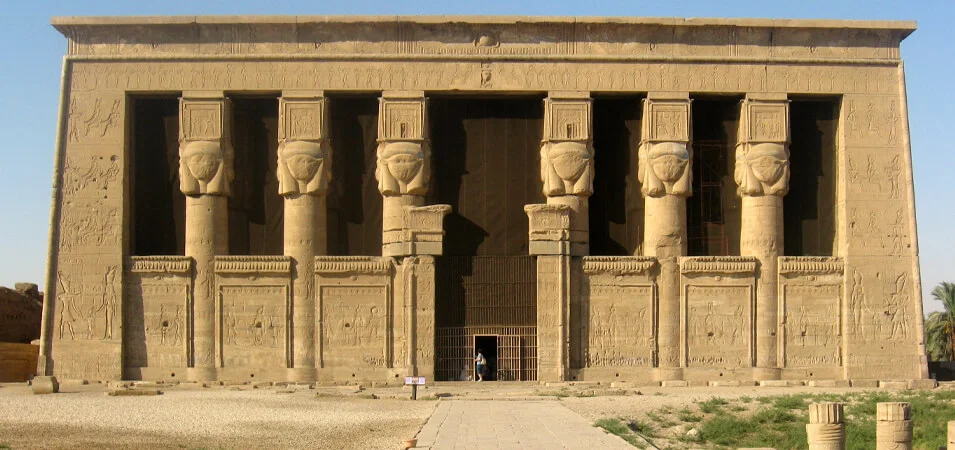
Egypt is a land woven with the threads of ancient mysteries, monumental architecture, and divine legends. While the Giza Plateau and the sprawling complexes of Luxor often dominate the itineraries of travelers, there exists a perfectly preserved jewel waiting just a short distance off the beaten path. Located on the west bank of the Nile River, approximately 60 kilometers north of Luxor in the Qena Governorate, lies the magnificent dendera temple egypt. Covering an expansive area of roughly 40,000 square meters, this colossal complex is surrounded by a massive mud-brick enclosure wall that once protected its sacred rites from the uninitiated.
At the very heart of this vast archaeological site is the main temple dedicated to Hathor, one of the most revered, complex, and beloved deities in the ancient Egyptian pantheon. Hathor was not merely a local goddess; she was the divine personification of love, beauty, joy, music, motherhood, and healing. Often depicted as a beautiful woman with cow ears, or entirely as a celestial cow bearing the sun disk between her horns, she was considered the symbolic mother of the earthly pharaohs.
To step into Dendera is to cross the threshold into a world where theology, astronomy, and holistic medicine intertwined. It is a place that reflects the vibrant, nurturing energy of Hathor herself. Unlike many ruins that require a vivid imagination to picture their former glory, Dendera stands intact, offering a literal roof over your head and a breathtaking window into the spiritual life of antiquity.
History of Construction: A Tapestry of Eras
The physical structure of the Dendera Temple that greets visitors today is primarily a product of the late Ptolemaic and early Roman periods. However, the spiritual footprint of this site stretches back millennia, reaching deep into the annals of the Old Kingdom.
Ancient Foundations: Textual evidence and archaeological fragments suggest that early sanctuaries dedicated to Hathor existed on this very spot during the reigns of Old Kingdom pharaohs such as Pepi I. Later, formidable New Kingdom rulers, including Thutmose III and Ramses II, also contributed to the site. Over centuries, these older structures were dismantled, their sacred stones repurposed or lost to the sands of time.
The Ptolemaic Revival: The massive construction project that resulted in the current main temple began in the late Ptolemaic era, specifically under the reign of Ptolemy XII Auletes, the father of the famous Cleopatra. The Ptolemies, a Greek dynasty ruling Egypt, built temples in the traditional Egyptian style to legitimize their rule in the eyes of the local populace and the powerful priesthood.
The Era of Cleopatra VII: The rear portions of the temple hold immense historical significance, as they were completed during the reign of Cleopatra VII. On the exterior of the southern rear wall, visitors can find a spectacular, rare relief carving. It depicts Cleopatra alongside her son, Ptolemy XV Philopator Philometor Caesar—better known as Caesarion, the son she bore with Julius Caesar. The carving shows them presenting offerings to Hathor and other deities, a bold political and religious statement asserting Caesarion's divine right to rule.
Roman Additions: Following the fall of the Ptolemaic dynasty, the Roman Emperors recognized the importance of Dendera. Emperors such as Augustus, Tiberius, Caligula, Claudius, and Trajan expanded the complex. They added monumental gateways, outer walls, and the intricate birth houses (Mammisis) that stand within the enclosure today.
Why Dendera Temple Is One of Egypt's Greatest Treasures
When discussing the monumental legacy of ancient Egypt, dendera temple egypt consistently ranks among the most significant surviving structures. Its value to historians, art lovers, and travelers cannot be overstated, primarily for the following reasons:
An Astonishing State of Preservation: Time, weather, and human intervention have reduced many of Egypt's great temples to open-air ruins. Dendera defied this fate. Because the temple was swallowed by desert sands and accumulated debris for centuries, its core architecture remained highly protected. The massive roof is completely intact, the soaring columns bear their intended weight, and the intricate stone staircases remain perfectly functional. Walking through Dendera is the closest a modern traveler can get to experiencing an ancient Egyptian temple exactly as it was designed.
The Resurrection of Vibrant Colors: For generations, the ceilings and walls of Dendera were cloaked in a thick, pitch-black layer of soot. This was the result of cooking fires lit by Bedouins, early Christians, and villagers who used the abandoned temple as a shelter. In recent years, Egyptian restoration teams embarked on a painstaking chemical cleaning process to remove this soot. The results have been nothing short of miraculous. Stripping away the black carbon revealed stunning, original pigments from over 2,000 years ago: vivid celestial blues, brilliant malachite greens, and radiant yellows that look as though the artisans painted them yesterday.
Unparalleled Artistic Detail: Every square inch of the temple's walls is inscribed with deeply carved, highly detailed reliefs. These carvings serve as a stone encyclopedia, documenting religious hymns, daily cultic rituals, foundation ceremonies, and the ancient Egyptians' profound understanding of the cosmos.
A Sacred Center of Healing and Worship
While it functioned as a traditional site for divine offerings, Dendera was equally renowned across the ancient world as a premier center for holistic medicine and miraculous healing. It was the ancient equivalent of a grand sanatorium or a spiritual wellness retreat.
The Ancient Sanatorium: Within the temple precinct lie the mud-brick remains of the Sanatorium. This is the only structure of its specific kind currently known in an ancient Egyptian temple context. It functioned as a hospital and hostel where pilgrims from all corners of the empire arrived, seeking cures for ailments of the body and mind that baffled ordinary physicians.
The Magic of Sacred Water: Healing at Dendera often involved water rituals. Priests would pour water over specialized statues and stone blocks (stelae) that were densely inscribed with magical spells, medical incantations, and divine names. As the water cascaded over these sacred words, it was believed to absorb their therapeutic power. The consecrated water collected in small basins below, where patients would either drink it or bathe in it, hoping the divine energy would purge their sickness.
Dream Incubation Therapy: Perhaps the most fascinating medical practice at Dendera was "dream incubation." Patients deemed to have psychological or deeply rooted physical issues were placed in dark, quiet crypts or specialized sleeping quarters within the temple grounds. Here, they would fall asleep in the sacred presence of the goddess. The belief was that Hathor, or associated healing deities, would visit the patient in their dreams to offer comfort, diagnose the source of their suffering, or prescribe a specific remedy. The following morning, highly trained priest-physicians would interpret these dreams and administer the appropriate herbal or magical treatments.
A Peaceful Alternative to Crowded Temples
If you have navigated the colossal pillars of Karnak or elbowed your way through the tour groups at the Luxor Temple, you know that the sheer volume of tourists can sometimes dilute the mystical atmosphere of these ancient sites. Dendera offers a radically different experience.
A Haven of Serenity: Because it sits roughly an hour's drive from the primary tourist hub of Luxor, Dendera sees only a fraction of the daily foot traffic. This geographical slight buffer transforms the temple into a peaceful sanctuary. Visitors often find themselves entirely alone in vast, echoing halls, allowing for a deeply personal and uninterrupted connection with antiquity.
An Immersive, Unhurried Exploration: Without the pressure of crowds, you are free to explore the temple at your own pace. You can linger under the astronomical ceiling, carefully descend into the hidden crypts without feeling rushed, and climb to the roof in perfect silence. This tranquility allows you to absorb the spiritual weight of the space, making it easy to imagine the faint smell of kyphi incense and the rhythmic chanting of ancient priests echoing off the sandstone walls.
Getting There: Logistics and Travel Tips
| Travel Method | Details & Recommendations |
|---|---|
| Private Taxi | Many agencies offer half-day tours to Dendera, frequently combining it with a trip to the magnificent Temple of Seti I in Abydos. This is highly recommended for history enthusiasts. |
| Trains (Budget) | For the adventurous, you can take a First or Second-class train from Luxor Station to Qena Station (approx. 45 minutes). From Qena, catch a local microbus or taxi to the temple (a 10-minute ride). |
| Operating Hours | The temple is generally open daily from 7:00 AM to 4:00 PM (hours may be shortened during the holy month of Ramadan). |
| Guided Tours | Many agencies offer half-day tours to Dendera, frequently combining it with a trip to the magnificent Temple of Seti I in Abydos. This is highly recommended for history enthusiasts. |
Essential Tips for Your Visit:
Arrive Early: Visiting right at opening time not only ensures maximum solitude but also allows you to witness the spectacular morning light beaming through the roof slits, illuminating the dust motes and reliefs.
Bring a Flashlight: While modern lighting has been installed, a personal flashlight or a fully charged phone light is invaluable for illuminating the intricate carvings inside the dark crypts.
Look Up: The most spectacular artwork in Dendera is on the ceilings. Prepare to spend a lot of time gazing upward.
Highlights Inside the Temple Complex
Passing through the massive Roman gateway of Domitian and Trajan, you enter a courtyard leading to the majestic facade of the main temple. The complex is packed with architectural marvels. Here are the distinct highlights you must explore.
The Great Hypostyle Hall
Also known as the Hall of Appearance, this is the architectural centerpiece of Dendera and arguably one of the most visually stunning rooms in all of Egypt.
The Columns of Hathor: The hall is supported by 24 massive stone columns, each soaring approximately 15 meters high. The capitals (tops) of these pillars are uniquely carved with the face of Hathor on all four sides. The columns are styled to resemble a sistrum, a sacred musical rattle used by priestesses to pacify deities and drive away chaotic forces. Though many of the faces were tragically defaced by religious zealots in late antiquity, their sheer scale remains awe-inspiring.
The Astronomical Ceiling: The ceiling of this hall is a masterclass in ancient cosmology, entirely freed from centuries of black soot. It is painted in a mesmerizing, vibrant blue. The artwork depicts the sky goddess Nut arching her star-studded body across the heavens. She is shown swallowing the sun disk in the evening and giving birth to it in the morning. The ceiling is divided into registers that map out the movements of the planets, the phases of the moon, the decans (star groups), and representations of the wind and solar barques navigating the cosmic waters.
The Hidden Crypts
Beneath the floor level and tucked within the massive thickness of the temple's outer walls lies a complex labyrinth of secret crypts.
Purpose of the Crypts: Out of the 14 identified crypts, only a few are accessible to the public. These subterranean chambers were the ultimate high-security vaults of the ancient world. They were used to store the temple's most sacred and valuable cult objects, including golden statues of deities, ritual vessels, and divine emblems that were brought out only for specific annual festivals.
The "Dendera Light" Reliefs: Descending into these tight, airless spaces brings you face-to-face with one of Egyptology's most controversial reliefs. The carvings depict priests holding massive, elongated, bulb-like objects containing a wavy serpent, supported by a Djed pillar (a symbol of stability) and connected to what looks like a cable. Fringe theorists and proponents of "ancient aliens" argue these represent ancient electrical lightbulbs. However, mainstream Egyptologists understand this as a profound mythological metaphor. The "bulb" is the womb of the sky or a lotus flower, and the serpent is Harsomtus (Horus who unites the Two Lands), representing the spark of creation, divine consciousness, and the daily rebirth of the sun from the dark depths of the cosmos.
Rooftop Chapels and Astronomy
A visit to Dendera is not complete without ascending to the temple's roof, a privilege rarely afforded at other Egyptian monuments.
The Ascending and Descending Stairs: The temple features two distinct, magnificently decorated staircases. The eastern staircase is straight and was used by priests to carry the sacred statues up to the roof for the New Year festival, allowing the idols to be revitalized by the first rays of the sun. The western staircase is spiral, mimicking the flight of a bird or the descent of a celestial body, and was used for the procession's return journey. The walls of both staircases are flanked with beautiful reliefs of the priests in mid-procession.
The Osiris Chapels: Upon reaching the roof, you will find a suite of small chapels dedicated to the death and resurrection of Osiris, the lord of the underworld. The intricate carvings detail the myth of Osiris being murdered and dismembered by his brother Seth, and his subsequent magical reassembly and resurrection by his devoted wife, Isis.
The Dendera Zodiac: It was in one of these rooftop chapels that the legendary Dendera Zodiac was installed on the ceiling. This artifact is widely considered the oldest and most complete circular map of the night sky in existence, seamlessly blending Egyptian celestial navigation with Babylonian and Greek astrological signs (such as the Ram, the Bull, and the Scales). The artifact you see on the ceiling today is a meticulously crafted replica. The original sandstone zodiac was aggressively removed in 1821 by a French antiquarian named Sébastien-Louis Saulnier, who used gunpowder to blast it free. The original masterpiece now resides in the Louvre Museum in Paris.
The Mammisi (Birth House)
Standing adjacent to the main temple are the Mammisis, or birth houses, which celebrate the divine mystery of childbirth.
The Roman Mammisi: Built by Augustus and richly decorated by Trajan, this is the most prominent birth house on the site. It was dedicated to the theological concept of the divine birth of Ihy, the child god of music and the son of Hathor and Horus. In ancient times, the ruling pharaoh or emperor would participate in rituals here to symbolically associate their own reign with this divine lineage, thereby solidifying their right to rule.
The Guardian God Bes: The capitals of the columns surrounding the Mammisi are heavily decorated with figures of Bes. Bes was a dwarf deity with a distinctly grotesque, feline-like face, often depicted sticking out his tongue. Despite his frightening appearance, he was a fiercely protective god, specifically tasked with watching over pregnant women, mothers, and infants. It was believed his terrifying visage and the loud noise of his tambourine would scare away evil spirits during the vulnerable moments of childbirth.
Layers of History: Right next to the Roman Mammisi, you can spot the ruined foundations of a much older birth house built by Nectanebo I during the 30th Dynasty. Immediately adjacent to that lie the remains of a 5th-century Coptic Christian Basilica, visually demonstrating how this single piece of land served as a focal point for spiritual devotion across multiple, drastically different eras of human history.
Frequently Asked Questions
- What makes Dendera Temple unique compared to other Egyptian monuments?
How far is the temple from Luxor, and what is the best way to visit?
- The Dendera Temple complex is located about 60 kilometers (37 miles) north of Luxor, in the Qena Governorate. The journey takes approximately 1 to 1.5 hours by road. The most comfortable and flexible way to get there is by hiring a private taxi from Luxor, allowing you to explore at your own pace. Alternatively, many visitors opt for guided half-day tours, which frequently combine Dendera with a visit to the spectacular Temple of Seti I in nearby Abydos.
- Do the carvings in the Dendera crypts prove ancient Egyptians had electricity?
Conclusion
Ultimately, the dendera temple egypt is far more than a collection of ancient stones; it is a meticulously designed instrument of ancient theology, astronomy, and healing. It stands as a profound testament to the ancient Egyptians' desire to understand the universe and their place within it. From the towering Hathoric columns that support a vibrantly painted cosmos, to the enigmatic subterranean crypts that guard the secrets of creation, Dendera offers a comprehensively immersive journey into the past.
For travelers making their way through Upper Egypt, prioritizing a visit to this serene, beautifully preserved sanctuary is essential. It provides a rare opportunity to step away from the modern world and the typical tourist crowds, allowing you to walk the very same sacred halls that pharaohs, queens, and hopeful pilgrims walked millennia ago. The colors, the silence, and the profound energy of Hathor's temple will undoubtedly leave an indelible mark on your understanding of Egypt's timeless legacy.