
Travel Guide
Inside the Pyramid of Khafre: Uncovering the Secrets of Giza’s Second Largest Wonder
10 min read
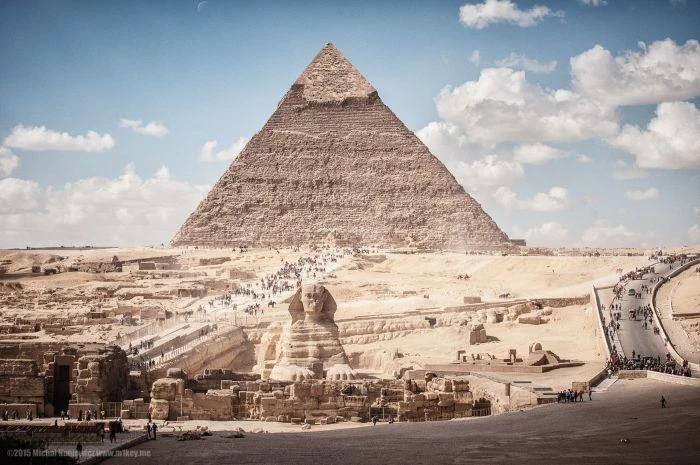
Standing as the middle giant of the Giza necropolis, the Pyramid of Khafre (or Chephren) is often misunderstood. While its neighbor, the Great Pyramid of Khufu, steals the limelight with its sheer mass, Khafre’s pyramid possesses an enigmatic grandeur and a sense of architectural mystery all its own. For the discerning visitor or the history enthusiast, this monument is not just a pile of stone; it is a sophisticated, calculated expression of divine kingship. When one considers the experience of stepping inside the pyramid of khafre, one is not merely entering a tomb, but a carefully calibrated engine designed to launch a pharaoh into the celestial realm.
The Historical Genesis: A Dynasty of Ambition
Commissioned around 2570 BC during the Fourth Dynasty of the Old Kingdom, this pyramid serves as a bridge between the early experiments of Sneferu and the massive complexity of Khufu. Khafre, son of Khufu, faced the monumental challenge of proving his legitimacy and divine status. He did not simply want a tomb; he wanted to anchor himself in the landscape of Giza forever.
The decision to build on the highest point of the plateau was a masterstroke of optical illusion. By positioning his monument on elevated bedrock, Khafre ensured that his pyramid would appear taller and more imposing than his father’s, even though it was designed with a slightly steeper angle (53.1 degrees) and a smaller base. This era was defined by an absolute control of resources; the state was a pyramid of power itself, with the Pharaoh at the apex, capable of mobilizing tens of thousands of skilled laborers to transform the limestone bedrock into an eternal stairway to the stars.
The Engineering Marvel: Beyond the Surface
To understand the construction, one must look at the technical labor force. Contrary to the "slave labor" myths of classical antiquity, recent excavations including the discovery of the worker’s village suggest a highly stratifie society of paid laborers, artisans, and specialized architects.
The construction utilized locally quarried limestone for the core, providing the structural mass, while the exterior was clad in a dazzling white Tura limestone. What makes Khafre’s pyramid uniquely "complete" to the modern eye is the preservation of its limestone cap at the apex. This remnant serves as a reminder of the original intent: a polished, reflective surface that would have caught the blinding Egyptian sun, turning the entire structure into a beacon visible from the edges of the Nile Valley. The masonry precision—where blocks of 15 tons are fitted with gaps no wider than a blade—continues to be a subject of intense modern structural analysis, challenging our perceptions of Bronze Age capabilities.
Inside the Pyramid of Khafre: A Journey into the Void
The experience of going inside the pyramid of khafre is one of the most haunting and intimate encounters with antiquity available today. Unlike the Great Pyramid, which features a complex array of ascending and descending galleries, the interior design of Khafre’s pyramid is deceptively straightforward yet profoundly evocative.
When you enter, you descend a long, steep passage carved directly into the bedrock and finished with polished limestone. The air is cool, heavy with the weight of millions of tons of stone pressing down from above. This descent represents a symbolic journey into the Duat (the underworld). Upon reaching the lower levels, the passage levels out, leading to the burial chamber.
This chamber is a marvel of architectural efficiency. Hewn directly into the heart of the bedrock, the ceiling is formed by massive, angled limestone gables that distribute the immense vertical pressure, ensuring the structural integrity of the hall. The highlight of the chamber is the massive, monolithic black granite sarcophagus, which was once protected by a sophisticated, though now defeated, stone-plugging system.
Stepping inside the pyramid of khafre allows visitors to touch the very granite blocks that were positioned over four millennia ago—a tactile connection to the absolute power of the Fourth Dynasty.
The Sphinx and the Complex: A Unified Necropolis
No discussion of Khafre is complete without the Great Sphinx. Many Egyptologists agree that the face of the Sphinx is a portrait of Khafre himself. This colossal statue acts as a sentinel, protecting the pyramid complex from the eastern approach.
The relationship between the pyramid, the Mortuary Temple, and the Valley Temple is a masterclass in religious spatial design. These buildings were not just administrative buildings; they were the "machines of resurrection." Rituals were performed here to bridge the gap between the mortal shell of the King and his divine Ka (spirit). The use of massive megalithic blocks—some weighing over 100 tons—in the valley temple walls showcases a level of precision that makes the modern construction industry seem rudimentary by comparison.
Unique Features and Architectural Signatures
What distinguishes this pyramid from all others?
The Casing Remnants: The preservation of the Tura limestone at the summit provides the only remaining visual link to how the Giza pyramids looked in their prime.
The Interior Simplicity: The internal layout is less "cluttered" than Khufu’s, focusing on a singular, powerful burial chamber.
Topographic Dominance: Its placement on the plateau’s highest peak makes it the most visually striking monument at sunrise and sunset.
Geological Harmony: The way the core masonry integrates with the natural limestone bedrock of the plateau creates a symbiotic relationship between man-made structure and nature.
The Modern Experience: Desert Cruise and the Giza Landscape
In the modern era, the Giza Plateau is a vibrant intersection of history and tourism. Companies like Desert Cruise have transformed the way we interact with these monuments. It is no longer enough to simply stare at the exterior; visitors now seek a narrative. By engaging with professional guides and utilizing comfortable transport, the experience of visiting the plateau becomes an educational odyssey. Whether it is navigating the sands on camelback to reach the perfect vantage point for sunset, where the pyramid’s silhouette glows in deep gold and purple hues, or learning about the complex logistics of the workers' lives, the modern visit is designed to humanize the massive scale of the monument.
Myths vs. Facts: Unmasking the Truth Behind the Pyramid
For centuries, the mystery surrounding the construction and purpose of these monuments has invited speculation ranging from the plausible to the fantastical. Separating the grain of historical fact from the chaff of pop-culture myth is essential for any serious study of Giza. When you stand inside the pyramid of khafre, it is helpful to look past the legends and appreciate the reality of human achievement.
Myth 1: The Pyramids Were Built by Slaves
The Myth: Popularized by Hollywood films and classical Greek writers like Herodotus, the narrative suggests that hundreds of thousands of slaves were whipped into building the pyramids.
The Fact: Archaeological evidence tells a radically different story. Excavations of the "Workers' City" on the Giza Plateau reveal a highly organized society. Laborers were well-fed, receiving a protein-rich diet of cattle and sheep, and were provided with medical care—we have found skeletal remains showing evidence of successful surgery and healed fractures. Building the pyramid was considered a national service, a way to contribute to the divine stability of the state, not an act of forced servitude.
Myth 2: The Geometry is Encoded with Alien Technology
The Myth: Some suggest that the mathematical precision, the alignment with Orion’s Belt, and the sheer scale of the stone blocks are impossible for a "primitive" civilization, implying the use of extraterrestrial intervention.
The Fact: This perspective ignores the centuries of architectural evolution leading up to the Fourth Dynasty. Egyptian builders were master surveyors. They used simple yet effective tools: plumb lines, water-leveling trenches, and the observation of circumpolar stars to achieve their alignments. The "miracle" was not alien technology, but the power of a centralized government to organize, feed, and manage a massive, skilled workforce over decades.
Myth 3: The Pyramid was a Power Plant
The Myth: Alternative theories suggest the pyramids were sophisticated machines that generated wireless electricity for the ancient world.
The Fact: While the pyramid’s granite chambers and limestone casing do possess unique acoustic and geological properties, there is zero physical or chemical evidence of electrical conductors, wiring, or components. The design is consistently aligned with the funerary requirements of the Old Kingdom: a safe, eternal resting place for the Pharaoh’s physical body and his Ka.
Myth 4: The Internal Chambers are Cursed
The Myth: Tales of "mummy’s curses" and mysterious deaths of explorers have plagued the history of Egyptian archaeology.
The Fact: These legends gained traction in the 1920s following the discovery of Tutankhamun’s tomb. They are largely sensationalist inventions of the press. When entering the interior, visitors may experience dizziness or claustrophobia due to the high humidity and stale air, but these are purely physiological responses to the confined, subterranean environment, not supernatural phenomena.
Myth 5: The Sphinx was Built by an Older Civilization
The Myth: Some argue that erosion patterns on the Sphinx suggest it was built thousands of years earlier than the Fourth Dynasty.
The Fact: Geological and archaeological consensus remains firm: the Sphinx was carved during the reign of Khafre. Its proximity to the Pyramid of Khafre and its incorporation into the same valley temple complex confirm that it was an integral part of the pharaoh’s broader vision for his necropolis.
Frequently Asked Questions
Is it safe to go inside the pyramid of khafre?
Yes, the interior is open to the public and considered safe for those in good health. However, because the passageways are narrow, steep, and have low ceilings, it requires a certain level of physical fitness. Those with claustrophobia or respiratory issues should exercise caution due to the high humidity and enclosed nature of the space.
What will I see when I am inside the pyramid of khafre?
Unlike the grand, multi-chambered interiors of some other monuments, the interior of Khafre's pyramid is stark and minimalist. You will experience a long, descending corridor carved into the bedrock, leading to a spacious, gabled burial chamber. The highlight is the massive, floor-embedded granite sarcophagus, which remains in the chamber today, offering a direct, silent connection to the pharaoh's final resting place.
Do I need a special ticket to go inside the pyramid of khafre?
Yes, access to the interior is not included in the standard entry ticket for the Giza Plateau. You must purchase a separate, additional ticket specifically for the interior of the pyramid. These tickets are often limited in number per day, so it is highly recommended to buy them early in the morning at the site’s main gate or through the official tourism portal.
Conclusion
The Pyramid of Khafre is not merely a tomb; it is a manifestation of the Egyptian belief in the infinite. By harmonizing geometry, astronomy, and geology, Khafre left behind a monument that has survived the rise and fall of empires, the encroachment of urbanization, and the passage of millennia.
Whether you are standing at the base, gazing up at the remaining casing stones, or feeling the ancient chill of the air while inside the pyramid of khafre, you are witnessing the pinnacle of human aspiration. It remains a humbling reminder that while rulers pass into history, the works they dedicate to their vision of the cosmos can achieve a form of true immortality. The Giza Plateau continues to call to those who wish to understand the foundations of civilization, offering a journey that is as much about the discovery of the past as it is about the reflection of our own human desire to be remembered.