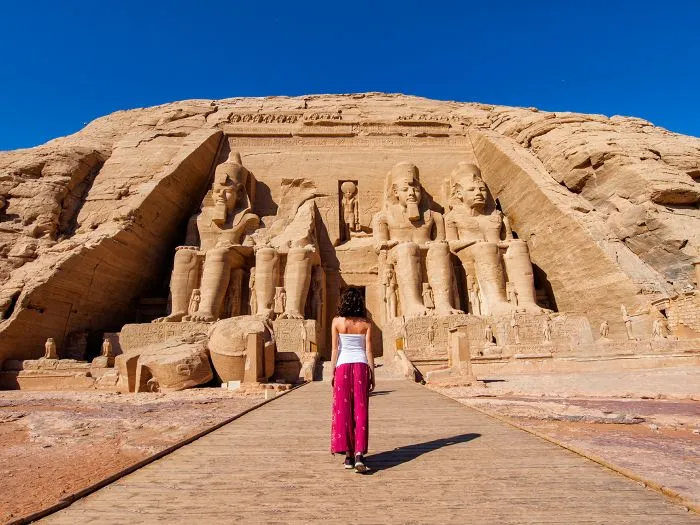
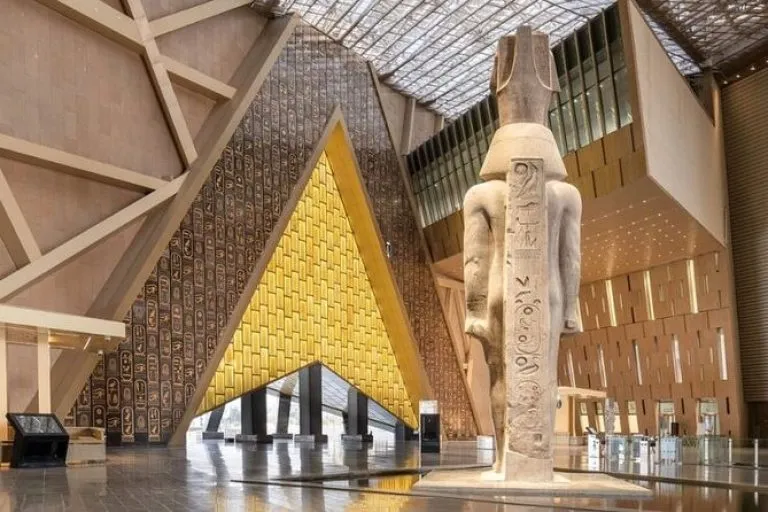
Grand Egyptian Museum Guide Tours offer a once-in-a-lifetime opportunity to explore the world’s largest archaeological museum dedicated to a single civilization. Located near the Giza Pyramids, the Grand Egyptian Museum showcases thousands of ancient artifacts, including the complete treasures of King Tutankhamun, displayed with cutting-edge technology and immersive storytelling. Through expertly Grand Egyptian Museum Guide, visitors can experience Egypt’s rich history in a modern setting that brings the wonders of ancient civilization vividly to life.
Number of Artifacts and Civilizations Represented
The museum contains more than 100,000 artifacts, including over 51,000 pieces that have been carefully transferred from various Egyptian sites. These collections represent many eras and civilizations, including prehistoric Egypt, the Old Kingdoms, Middle Kingdoms, and New Kingdoms, as well as the Greco-Roman era. Among the highlights is the complete collection of king Tutankhamun treasure, displayed for the first time in one place.
1. Why is the Grand Egyptian Museum (GEM) Considered a World Wonder?
Spanning over 500,000 square meters, the GEM is a $1 billion masterpiece designed to house Egypt’s most precious treasures. It is strategically located between the modern city of Cairo and the ancient Giza Pyramids, serving as a portal that connects 5,000 years of history. It is designed to accommodate over 15,000 visitors per day, making it a global hub for tourism and Egyptology.
2. How Does the GEM Compare to the Old Tahrir Museum?
To understand the scale of this achievement, we must look at how it differs from the historic Tahrir Museum:
| Feature | The Egyptian Museum (Tahrir) | The Grand Egyptian Museum (GEM) |
| Total Area | Approx. 15,000 $m^2$ | Over 500,000 $m^2$ |
| Tutankhamun Display | Selected pieces (Approx. 1,500) | The Full Collection (5,000+ pieces) |
| Technology | Traditional displays | AI, VR, and Interactive Storytelling |
| Experience | Classical/Atmospheric | Immersive/21st Century |
Official Opening Hours
The Grand Egyptian Museum Guide operates daily with structured hours to accommodate visitors. Regular days (except Saturday and Wednesday): the museum complex opens at 8:30 AM to 7:00 PM, exhibition halls from 9:00 AM to 6:00 PM, with last ticket entry at 5:00 PM. On Saturdays and Wednesdays, extended hours apply: complex until 10:00 PM, halls until 9:00 PM, last entry at 8:00 PM, offering evening experiences under dramatic lighting. During Ramadan 2025, hours shorten to 9:00 AM to 4:00 PM.
How to Plan Your Visit Grand Egyptian Museum ?
Tickets must be booked online via the official GEM website in advance due to high demand, with two entry methods available: standard timed slots or guided grand egyptian museum tours. Arrive early to pass security checks at the main entrance near the Giza pyramids; parking, shuttles from Cairo, and accessibility options for wheelchairs are provided. Allocate 4-6 hours minimum, as the vast layout requires pacing; audio guides, apps, and multilingual grand egyptian museum tours enhance navigation.
3. What are the Technical Secrets Behind the GEM’s Security and Lighting?
Bulletproof Display Cases: The treasures of King Tutankhamun are protected by German-engineered, ultra-clear, bulletproof glass. These cases maintain a precise “micro-climate” to prevent organic decay.
Eco-Friendly Lighting: The museum uses a specialized “Cold LED” system that emits zero UV radiation, ensuring that the vibrant colors of 3,000-year-old paintings do not fade.
Advanced Security: A multi-layered AI surveillance system monitors the museum 24/7, combined with a gas-based fire suppression system that protects delicate papyrus from water damage.
Why is the Hanging Obelisk at the GEM Entrance So Famous?
The Hanging Obelisk is the first of its kind in the world. It is positioned at the museum’s entrance, elevated on four columns. This unique engineering allows visitors to walk underneath it and see the royal cartouche of King Ramses II engraved on its base—a view that remained hidden for thousands of years.
How Can You See the Full Tutankhamun Collection for the First Time?
For the first time since Howard Carter discovered the tomb in 1922, the entire 5,000-piece collection of Tutankhamun is displayed in one location. Two massive dedicated galleries showcase everything from his iconic golden mask and sarcophagi to his chariots, clothes, and even the food items buried with him to accompany him in the afterlife.
What is the Story Behind Moving the Ramses II Statue and the Khufu Solar Boat?
The museum is home to massive monuments that required legendary engineering feats to move:
Ramses II Statue: The 3,200-year-old, 83-ton statue was moved from Ramses Square to its permanent home in the GEM’s Grand Atrium in a historic procession.
The Solar Boat: The 4,500-year-old cedar boat of King Khufu was transported from the Pyramid site to the museum in a specially designed shock-absorbent container to ensure its absolute safety.
What Facilities and Amenities are Available Inside the GEM?
The museum is designed to be a full-day destination:
Commercial Zone: Includes high-end restaurants, cafes, and gift shops selling authentic replicas.
Children’s Museum: An interactive space using Augmented Reality (AR) to teach kids about ancient Egypt.
Grand Staircase: A 60-meter vertical gallery featuring 87 royal statues and architectural elements.
What are the Best Tips for an Unforgettable Grand Egyptian Museum Tour?
Arrive Early: The museum is vast; you will need at least 4 to 6 hours to see the main highlights.
Guided vs. Self-Guided: While self-guided tours are available, a professional Grand Egyptian Museum tour guide is highly recommended to explain the deep symbolism behind the artifacts.
Photography: Flash is strictly prohibited, but standard photography is allowed in most areas.
Conclusion
The Grand Egyptian Museum Guide represents a monumental achievement in preserving and presenting Egyptian heritage. With its vast collection, innovative design, and visitor-centric layout, GEM offers an unparalleled window into one of the world’s oldest civilizations, allowing visitors to discover and connect with Egypt’s cultural legacy like never before.