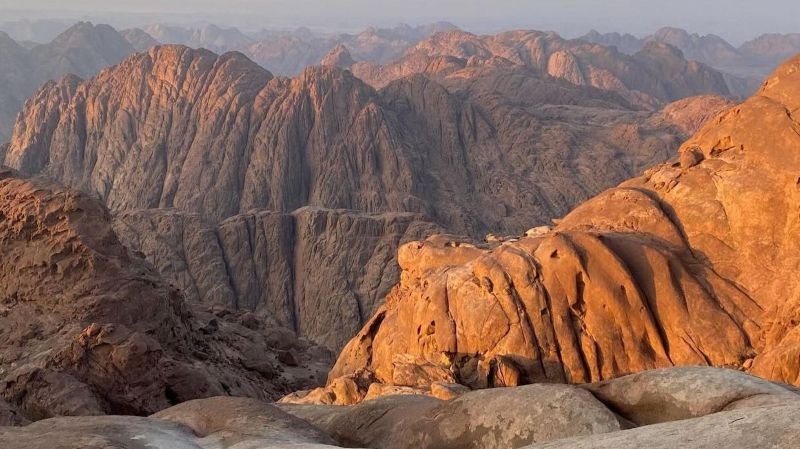
Standing at the heart of a jagged granite wilderness, Sinai mountain remains one of the world’s most spiritually and geologically significant landmarks. Rising 2,285 meters above sea level in the southern Sinai Peninsula, this iconic peak is revered as the site where Moses received the Ten Commandments. Visitors flock here for the legendary Sinai sunrise hike, a transformative journey that combines rigorous physical adventure with profound historical resonance within the Egyptian desert.
Where is Sinai mountain located?
Sinai mountain, also known as Mount Horeb or Jebel Musa, is located in the southern region of the Sinai Peninsula in Egypt. It sits within the St. Catherine Governorate, approximately 230 kilometers from Sharm El Sheikh. The mountain is part of the Sinai High Wetland, a rugged landscape characterized by ancient igneous rock and high-altitude desert plateaus.
Geographically, the peak is nestled within a massive complex of crystalline rocks that date back to the Late Precambrian era. This location serves as a bridge between Africa and Asia, creating a unique biological and geological crossroads.
Travelers usually access the site via the city of St. Catherine, which serves as the primary base for all expeditions. The surrounding area is protected as part of the St. Catherine Protectorate, ensuring the preservation of its unique high-altitude ecosystem.
The proximity to the Red Sea coast makes it a popular midnight departure for tourists staying in coastal resorts. Despite its remote desert setting, the infrastructure connecting the mountain to major Egyptian hubs is well-established for international pilgrims and hikers.
Why is Sinai mountain religiously significant?
Sinai mountain holds immense religious significance as a “holy mountain” in Judaism, Christianity, and Islam. It is traditionally identified as the biblical Mount Sinai, the location where Prophet Moses encountered the Burning Bush and received the Decalogue from God. This shared heritage makes the peak a global center for interfaith pilgrimage.
The spiritual weight of the mountain is anchored by the presence of St. Catherine’s Monastery at its foot. This UNESCO World Heritage site is one of the oldest working Christian monasteries in existence, housing a library of rare manuscripts second only to the Vatican.
For pilgrims, the act of ascending the peak is a symbolic reenactment of Moses’s journey. Many believe the physical struggle of the climb serves as a form of purification before reaching the summit’s small chapel and mosque.
Beyond the Abrahamic traditions, the mountain represents a site of historical continuity. It has been a place of retreat for hermits and monks since the 4th century AD, creating a dense layer of spiritual energy that permeates the granite landscape.
What is the altitude of sinai mountain?
The altitude of Sinai mountain is 2,285 meters (approximately 7,497 feet) above sea level. While it is not the highest peak in Egypt—an honor belonging to the neighboring Mount Catherine—its prominence and steep ascent provide a challenging and rewarding high-altitude environment for hikers and religious travelers.
The elevation of the peak creates a distinct microclimate that differs significantly from the coastal plains of the Sinai Peninsula. Temperatures at this altitude can drop below freezing during winter nights, even when the coast remains warm.
At this height, the air is notably thinner, which can affect the pace of the climb for those unaccustomed to mountain trekking. However, the elevation provides the perfect vantage point for panoramic views of the surrounding jagged peaks.
Understanding the altitude is crucial for safety and preparation. The gain of over 700 meters from the monastery floor to the summit requires a steady heart rate and proper hydration to manage the change in atmospheric pressure
What is the Sinai sunrise hike experience like?
The Sinai sunrise hike is a nocturnal pilgrimage that begins around 2:00 AM to reach the summit before dawn. Hikers navigate the “Camel Path” under a canopy of desert stars, culminating in a breathtaking panoramic view as the sun illuminates the red granite peaks of the Sinai Peninsula.
The experience begins in the silence of the desert night, with the trail illuminated by the rhythmic bobbing of flashlights and headlamps. The cool night air provides a necessary reprieve from the intense heat that characterizes the Egyptian day.
As travelers reach the summit, a quiet hush usually falls over the crowd. The first light of dawn reveals a “sea of mountains,” where the jagged horizon turns shades of deep purple, fiery orange, and gold.
The descent is equally rewarding, as the daylight reveals the dramatic geological formations and ancient hermitages that were hidden in the dark. It is a sensory journey that combines physical exertion with a profound sense of peace.
How difficult is hiking Sinai mountain?
Hiking Mount Sinai is considered a moderate difficulty trek that requires a reasonable level of cardiovascular fitness. The most popular route, the Camel Path, is a wide, winding trail, while the “Steps of Penitence” offers a more strenuous, direct ascent via 3,750 steep rock-hewn stairs.
The Camel Path is accessible to most travelers, including children and seniors, as the incline is gradual. For those who find the climb too taxing, local Bedouin offer camel rides for the majority of the upward journey.
The final 750 steps to the summit must be completed on foot by everyone. These uneven granite stairs require careful footing and can be taxing on the knees, especially during the descent back to the monastery.
The primary challenge is often the timing and the cold rather than the technicality of the path. Hiking for three hours in the middle of the night requires mental stamina and adequate layers to manage the fluctuating temperatures.
When is the best time to visit Sinai mountain?
The best time to visit Sinai mountain is during the shoulder seasons of spring (March to May) and autumn (September to November). During these months, the daytime temperatures are mild, and the nighttime summit temperatures are chilly but manageable for most prepared international travelers.
Winter (December to February) offers stunning views and the rare possibility of snow on the peak. However, temperatures can drop as low as -10°C at the summit, requiring professional-grade cold-weather gear and high endurance.
Summer (June to August) presents the challenge of extreme heat during the descent. While the nighttime hike is cool, the return journey after sunrise can see temperatures exceeding 35°C, making the trek physically draining.
Regardless of the month, it is essential to check the lunar calendar. A hike during a full moon provides natural illumination of the desert, while a new moon offers unparalleled views of the Milky Way and constellations.
How to prepare for a Mount Sinai hike?
To prepare for a Sinai mountain hike, travelers should focus on layering clothing, including a windproof jacket, thermal base layers, and a hat. Proper footwear with ankle support is essential for the rocky terrain, and carrying at least two liters of water and high-energy snacks is mandatory.
Preparation should also include physical acclimatization. If you are coming from sea level (like Sharm El Sheikh), arriving in St. Catherine a few hours early can help your body adjust to the higher altitude before starting the climb.
A headlamp is highly recommended over a handheld flashlight to keep your hands free for balance. Many hikers also find trekking poles useful for navigating the “Steps of Penitence” during the downward leg of the journey.
Finally, mental preparation is key. The hike is a slow and steady process. Engaging with a local Bedouin guide not only ensures safety but also provides cultural context that enriches the overall Sinai desert experience.
What can travelers see near Sinai mountain?
Near Sinai mountain, travelers can explore the UNESCO-listed St. Catherine’s Monastery, the Burning Bush, and the Well of Moses. The surrounding St. Catherine Protectorate also offers access to Wadi Itlah, Mount Catherine (Egypt’s highest peak), and various ancient Bedouin settlements that showcase traditional desert life.
St. Catherine’s Monastery is the primary attraction, featuring the Transfiguration Church and a world-renowned collection of icons. Visitors can also see the “Charnel House,” where the bones of monks have been preserved for centuries.
For those interested in further hiking, the “Blue Desert” near Dahab or the “Coloured Canyon” offers contrasting geological wonders. These sites feature vibrant rock strata and narrow sandstone gorges that highlight the diversity of the Sinai landscape.
The town of St. Catherine itself provides a glimpse into the lives of the Jebeliya Bedouin tribe. These “people of the mountain” have served as the protectors and guides of the monastery and the mountain for over 1,500 years.
Is Sinai mountain safe for tourists?
Sinai mountain is generally safe for tourists, as the Egyptian government maintains strict security protocols and dedicated tourist police in the St. Catherine region. Travel is typically conducted via organized tours with registered guides, ensuring that hikers remain on designated paths within the protected national park area.
The region of South Sinai, where the mountain is located, has remained a stable and welcoming destination for international travelers for decades. Checkpoints are common on the roads leading to the monastery to ensure the safety of all visitors.
Safety on the mountain itself is largely a matter of physical preparation. It is vital to stay with your group and follow the instructions of your Bedouin guide, who is intimately familiar with the weather patterns and terrain.
Medical facilities in the immediate area are basic, so it is recommended that travelers have insurance and carry personal medications. Always check current travel advisories from your home country, but rest assured that thousands of visitors complete this hike safely every
How can Desert Cruise Travel help plan your Sinai mountain journey?
Desert Cruise Travel provides expert logistical support for your Sinai mountain expedition, offering seamless transfers, certified Bedouin guides, and tailored itineraries. We specialize in private sunrise hikes and cultural tours of St. Catherine’s Monastery, ensuring a safe, deeply immersive, and spiritually enriching experience for international travelers.
Whether you are departing from the bustling streets of Cairo or the luxury resorts of Sharm El Sheikh, we manage every detail of your transport. Our private, air-conditioned vehicles ensure you arrive at the trailhead rested and ready for the ascent.
Our Sinai desert experience packages go beyond the hike. We offer exclusive opportunities to engage with Bedouin communities, sharing traditional meals and learning about the ancient herbal medicine practiced in the high mountains.
For those seeking a more comprehensive journey through the Sinai Peninsula, we design custom itineraries that include the Blue Hole in Dahab, the canyons of Nuweiba, and the historical sites of Serabit el-Khadim.
Trusting Desert Cruise Travel means choosing local expertise and high safety standards. We pride ourselves on creating journeys that honor the sacred nature of the landscape while providing the comfort and reliability that modern travelers expect.
Conclusion
The ascent of Sinai mountain is more than just a trek; it is a pilgrimage through time, geology, and faith. Whether you are drawn by the promise of the most beautiful sunrise in the Sinai Peninsula or the desire to stand on ground held sacred by billions, the experience leaves an indelible mark on the soul.
Planning such a significant journey requires attention to detail and a deep respect for the local environment. By choosing an experienced partner like Desert Cruise Travel, you ensure that your focus remains on the majesty of the mountain rather than the logistics of the desert.
Would you like me to create a custom 3-day Sinai Peninsula itinerary that includes the Sinai mountain sunrise hike and a visit to the hidden canyons of the desert?