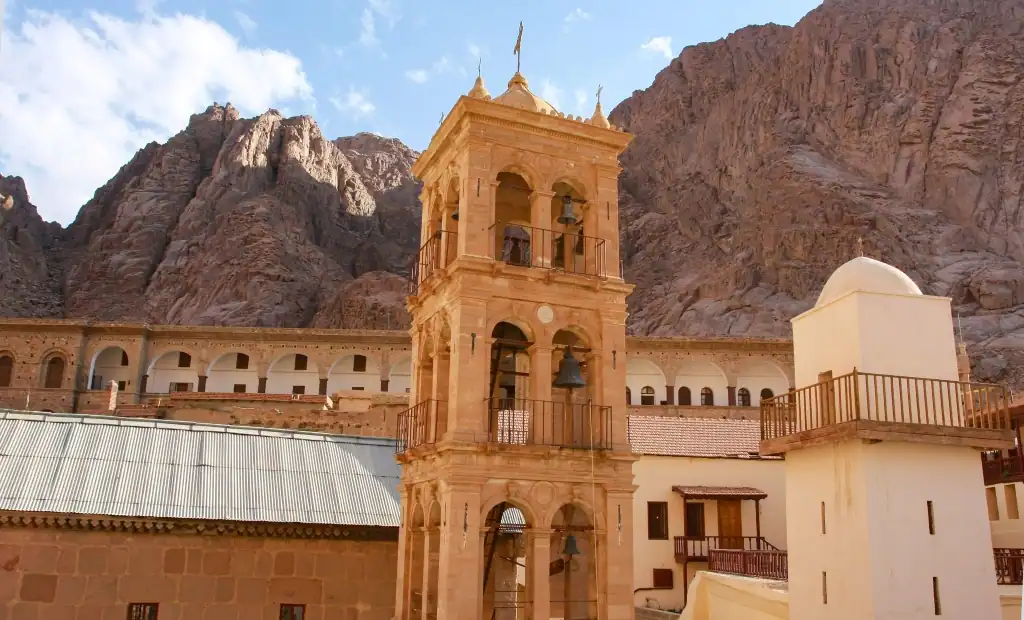
St Catherine Monastery Egypt is one of the world’s oldest continuously inhabited Christian monasteries. Located at the foot of Mount Sinai in South Sinai, this UNESCO World Heritage Site holds immense religious, historical, and cultural value for Christianity, Islam, and Judaism.
Built in the 6th century during the reign of Byzantine Emperor Justinian I, the monastery remains an active Greek Orthodox religious center and a symbol of interfaith heritage.St Catherine Monastery Egypt is a 6th-century Greek Orthodox monastery located at the base of Mount Sinai. Recognized by UNESCO, it is one of the oldest functioning monasteries in the world and houses priceless religious manuscripts, icons, and the traditionally identified site of the Biblical Burning Bush.
Why Is St Catherine Monastery Egypt So Important?
Religious Significance
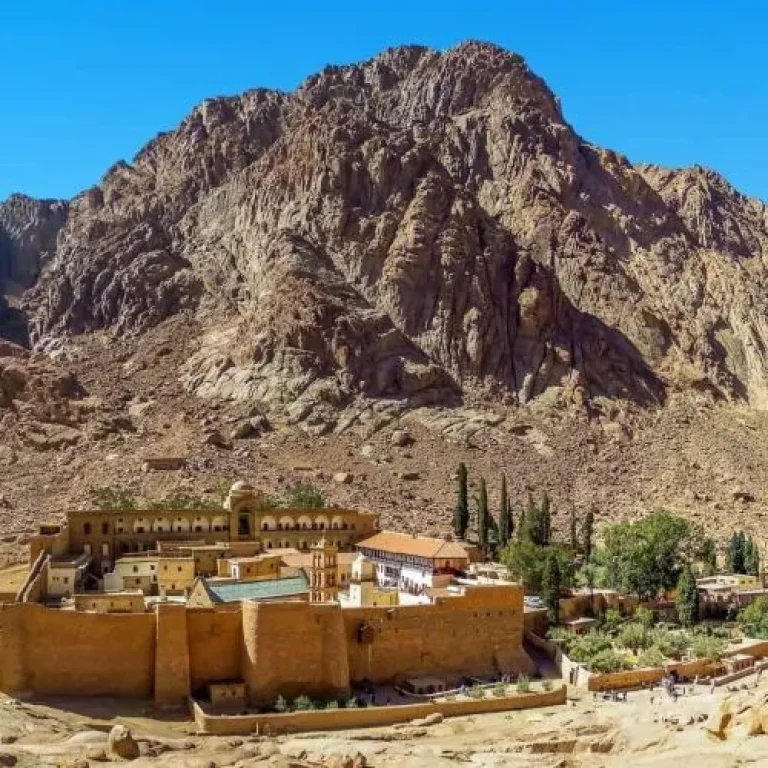
St Catherine Monastery Egypt stands at the foot of Mount Sinai, traditionally identified in Biblical and Quranic tradition as the mountain where Prophet Moses received the Ten Commandments, which gives the site profound importance across multiple faith traditions and centuries of theological interpretation.
It is considered sacred to:
Christians, who regard the monastery as one of the oldest active centers of monastic life in the world and a living testament to early Christian devotion, pilgrimage, and Byzantine religious architecture that has remained uninterrupted for more than fourteen centuries.
Muslims, who honor Mount Sinai as a holy place mentioned in the Quran and recognize the monastery through historical Islamic documents, including the Achtiname of Muhammad, a charter believed to grant protection, religious freedom, and safe conduct to the monks—frequently cited in interfaith scholarship and preserved in historical narratives.
Jews, who associate the surrounding area with the Exodus narrative and the divine revelation to Moses, making the broader Sinai region deeply embedded in Jewish religious history and scriptural tradition.
Islamic tradition further reinforces the monastery’s protected status, as multiple historical accounts and academic studies reference the Achtiname (also known as the Covenant of Prophet Muhammad), which is widely discussed in religious and historical research as an early example of formal interreligious protection.
Historical Importance
According to UNESCO documentation and Byzantine historical records, St Catherine Monastery Egypt represents one of the most extraordinary examples of architectural continuity and spiritual endurance in the Christian world.
The monastery was constructed between 548 and 565 AD under the orders of Byzantine Emperor Justinian I, reflecting imperial support for preserving what was already considered a sacred biblical landscape during the early Christian era.
It has remained continuously operational for over 1,400 years, surviving dramatic political transformations including Byzantine decline, Islamic expansion, Crusader presence, Ottoman rule, and modern state formation, all while maintaining its religious function and monastic community.
Its remote and mountainous location in South Sinai played a strategic role in protecting it from widespread destruction that affected many other early Christian sites, enabling the preservation of priceless manuscripts, mosaics, and icons that scholars continue to study today.
Because of this uninterrupted spiritual function and remarkable architectural preservation, st catherine monastery egypt is widely regarded by historians, theologians, and cultural heritage experts as one of the most resilient and enduring religious institutions in the Middle East.
The monastery houses the famous “Burning Bush,” which still flourishes on the premises, and has an extensive library containing ancient Christian texts, many of which are priceless. Visitors can explore the monastery’s church, which features stunning Byzantine mosaics, and the iconography that adorns its walls, depicting scenes from the life of Christ and early Christian saints.
Architectural Highlights of St Catherine Monastery Egypt
The monastery resembles a fortified citadel, built with thick granite walls for protection.
Key Architectural Features
The Basilica of the Transfiguration
Houses stunning 6th-century mosaics.
Considered one of the finest surviving examples of Byzantine art.
The Burning Bush Chapel
Believed to mark the biblical Burning Bush site.
The plant species (Rubus sanctus) still grows within the complex.
The Monastery Library
Contains one of the world’s oldest collections of Christian manuscripts.
Second only to the Vatican Library in early Christian codices.
Includes the famous Codex Sinaiticus (now largely preserved in international institutions).
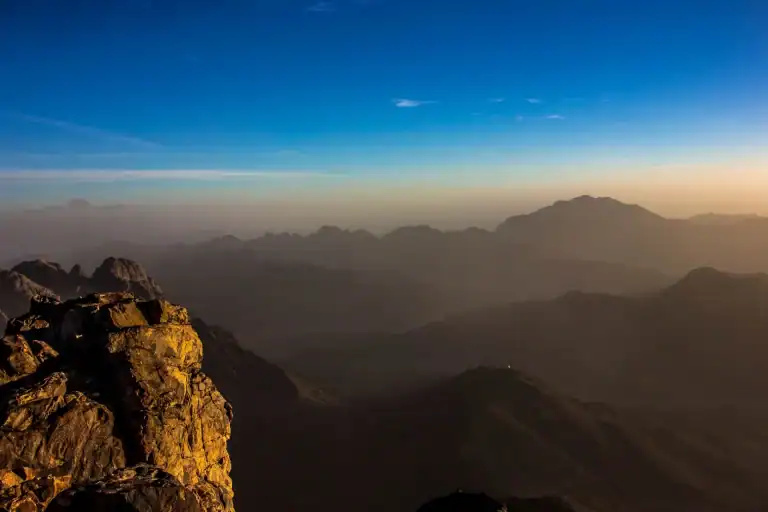
There are two main routes to the summit: the Camel Path (Siket al-Basha), a longer but gentler slope, and the Steps of Repentance (Siket al-Tawba), a steeper, more strenuous path that takes you directly to the top. The climb typically takes between 2 and 3 hours, and many choose to embark on the hike in the early hours of the morning to catch the breathtaking sunrise from the summit, an experience that leaves an indelible mark on every traveler.
The Surrounding Area: Nature and Adventure
While St. Catherine Monastery and Mount Sinai are the most famous attractions, the surrounding Sinai Peninsula is rich in natural beauty and adventure. The desert landscape is dotted with rugged mountains, unique rock formations, and striking colors that transform under the changing light. The area’s tranquility offers an opportunity for reflection and connection with nature.
Visitors to the region can also explore the nearby Wadi Feiran, an oasis valley that offers a glimpse into the area’s natural history. This lush valley, fed by the waters of the nearby mountains, is home to palm trees, herbs, and rare wildlife, providing a stark contrast to the surrounding desert.
Cultural Significance and Local Communities
The Sinai Peninsula is home to several Bedouin tribes who have lived in the region for centuries. These nomadic people have adapted to the harsh desert environment, maintaining their unique traditions and cultural practices. A visit to the area offers a chance to experience Bedouin hospitality, taste traditional dishes, and learn about their way of life.
Visiting St Catherine Monastery Egypt
Planning your visit to St Catherine Monastery Egypt requires understanding its mountain location, operating schedule, and cultural guidelines to ensure a smooth and respectful experience. Because it remains an active religious site—not just a tourist attraction—visitors should prepare accordingly.
Location
St Catherine Monastery Egypt is situated in the Saint Catherine area of South Sinai, at the foot of Mount Sinai, within a UNESCO World Heritage landscape known for its dramatic granite mountains and spiritual heritage.
It is approximately:
2.5 to 3 hours from Sharm El Sheikh by road, making it a popular day trip for travelers staying in Red Sea resorts who wish to combine a Mount Sinai sunrise hike with a morning monastery visit.
Around 6 hours from Cairo by car, depending on traffic conditions and security checkpoints, which makes it more suitable for an overnight trip rather than a same-day return journey.
The monastery sits at an altitude of 1,570 meters above sea level, which results in significantly cooler temperatures compared to coastal cities such as Sharm El Sheikh or Hurghada, especially during winter months when early morning temperatures can drop close to freezing.
Opening Hours
Because St Catherine Monastery Egypt functions as an active Greek Orthodox monastery, visiting hours are limited and structured around religious practices.
The monastery is typically open in the early morning hours, usually closing before midday to preserve monastic privacy and religious routines.
It is generally closed on Fridays, Sundays, and major Christian religious holidays, though schedules may vary depending on liturgical observances.
Visitors are strongly advised to confirm current opening times with official Egyptian tourism authorities or licensed tour operators before traveling, as access policies may change due to religious events or administrative regulations.
Arriving early is highly recommended, especially during peak travel seasons between October and April.
Entry Guidelines
Since St Catherine Monastery Egypt remains a sacred and functioning religious institution, visitors are expected to follow respectful guidelines.
Modest dress is required, meaning shoulders and knees should be covered for both men and women, reflecting the monastery’s religious character and long-standing traditions.
Photography may be restricted inside certain areas, particularly within the basilica and museum sections, where flash photography can damage ancient icons and mosaics.
Hiring a licensed local guide is highly recommended, as guided tours provide deeper insight into the monastery’s Byzantine architecture, the significance of the Burning Bush site, and the historical importance of its manuscript collection.
Understanding and respecting these guidelines ensures that your visit to St Catherine Monastery Egypt remains culturally appropriate while allowing you to fully appreciate its religious and historical significance.
Best Time to Visit St Catherine Monastery Egypt
Choosing the right season significantly enhances your experience at St Catherine Monastery Egypt, especially because of its high-altitude mountain location and proximity to Mount Sinai.
Ideal Months to Visit
The best time to visit St Catherine Monastery Egypt is between October and April, when weather conditions are more comfortable for sightseeing and outdoor activities.
During this period:
Temperatures remain moderate throughout the day, typically ranging between cool mornings and pleasantly mild afternoons, which allows visitors to explore the monastery complex and surrounding landscape without the exhaustion caused by intense summer heat.
Hiking Mount Sinai becomes considerably more comfortable, particularly for those planning the traditional overnight ascent, as the cooler climate reduces heat stress and makes the climb safer and more enjoyable.
The risk of extreme desert heat is significantly reduced, which is especially important given the monastery’s 1,570-meter elevation and the limited shaded areas along trekking routes.
Winter nights (December–February) can be very cold, sometimes approaching freezing temperatures, so visitors should prepare accordingly.
Combining Mount Sinai and St Catherine Monastery Egypt
For many travelers, a visit to St Catherine Monastery Egypt is closely connected to the spiritual experience of climbing Mount Sinai, traditionally identified as the mountain where Moses received the Ten Commandments.
Mount Sinai trekking remains one of the most meaningful pilgrimage-style activities in Egypt, attracting both religious visitors and adventure travelers.
Popular Combined Experience
A well-organized itinerary typically includes:
A night hike up Mount Sinai, beginning after midnight with either the Camel Path (gradual ascent) or the Steps of Repentance (steeper, more demanding route), guided by local Bedouin trackers familiar with the terrain.
Sunrise viewing at the summit, where visitors witness panoramic views over the Sinai mountain range, a moment often described as spiritually powerful and emotionally memorable.
A morning visit to St Catherine Monastery Egypt, timed with opening hours, allowing travelers to explore the basilica, Burning Bush site, and monastery museum after descending from the mountain.
This combined experience blends physical adventure, deep religious symbolism, and historical discovery into a single, cohesive journey that reflects the unique character of the Saint Catherine region.
Travel Tips for Visitors
To maximize your visit to St Catherine Monastery Egypt, careful planning is essential due to the monastery’s limited visiting hours and mountainous environment.
Arrive early in the morning to avoid large tour bus crowds, especially during peak season, as the monastery closes before midday and visitor flow increases quickly after sunrise hikes.
Hire a licensed local guide to gain deeper historical and religious insight, particularly regarding Byzantine mosaics, early Christian manuscripts, and the interfaith significance of the site.
Bring layered clothing suitable for mountain conditions, since temperatures can drop sharply at night and in early morning hours, even when coastal cities remain warm.
Respect religious practices and monastery rules at all times, remembering that St Catherine Monastery Egypt is an active place of worship where monks continue daily spiritual life.
Planning ahead ensures that your visit is not only comfortable and efficient but also respectful of the monastery’s sacred and historical importance.
Conclusion
St. Catherine Monastery is more than just a historical site; it is a spiritual destination that offers a unique journey through faith, history, and nature. The nearby Mount Sinai, the surrounding desert, and the local Bedouin culture all contribute to making this one of Egypt’s most profound and awe-inspiring destinations. Whether you’re a pilgrim, history enthusiast, or adventurer, a trip to St. Catherine Monastery and its surrounding area promises an unforgettable experience.