Wadi El Hitan, also known as the Whale Valley, is a UNESCO World Heritage site located in the Fayoum Oasis of Egypt, renowned as the world’s most significant site for demonstrating the evolution of whales.
This prehistoric treasure trove contains hundreds of high-quality fossils of the earliest forms of whales, specifically the archaeoceti, which provide critical evidence of whales transitioning from land-based mammals to ocean-dwelling giants.
As a unique open-air museum set against a dramatic desert landscape, Wadi El Hitan offers unparalleled insights into marine biology, paleontology, and the dramatic geological shifts that transformed a prehistoric sea into the Sahara Desert.
What Makes Wadi El Hitan a UNESCO World Heritage Site?
Wadi El Hitan was designated a UNESCO World Heritage site because it provides the most iconic and complete fossil evidence of the evolution of whales from land-dwelling mammals to marine creatures.
The site is globally unique for its density of fossils and the exceptional state of their preservation, showing the transition of the whale’s hind limbs into flippers, a discovery that solved one of the greatest mysteries in natural history.
The Scientific Significance of the Site
The fossils found at Wadi El Hitan represent one of the most important chapters in the history of life on Earth.
Unlike other fossil sites, these remains are often found in their original geological context, allowing scientists to reconstruct the ancient ecosystem of the Tethys Sea.
Because the skeletons are so well-preserved, researchers can study the pelvic bones and hind limbs of species like Basilosaurus and Dorudon, proving their terrestrial ancestry.
Protecting a Natural Wonder
UNESCO recognition ensures that this delicate desert environment remains protected from urban encroachment and unsustainable tourism.
As a result, the site serves as a global benchmark for geological conservation and environmental education.
Therefore, the international community views this valley not just as an Egyptian treasure, but as a vital part of the world’s shared natural heritage.
Why Is Wadi El Hitan Called Whale Valley?
Wadi El Hitan is called Whale Valley because it houses the highest concentration of prehistoric whale fossils on the planet, dating back approximately 40 to 50 million years.
The name reflects the literal translation of the Arabic “Wadi Al-Hitan,” marking a location where thousands of marine fossils were discovered embedded in the golden sands of the Western Desert, far from any modern coastline.
The Mystery of the Desert Whales
Millions of years ago, this section of the Egyptian desert was submerged under the Tethys Sea, a massive body of water that once separated Africa from Eurasia.
As the sea receded due to climate shifts and tectonic movements, the marine life perished and was buried under layers of sediment.
Over eons, wind erosion stripped away the sandstone, revealing the massive skeletons of whales that once swam in these tropical waters.
Identifying the Ancient Species
The primary residents of this ancient sea were the Basilosaurus isis and the Dorudon atrox.
The Basilosaurus was a massive predator, reaching lengths of up to 18 meters, yet it still possessed vestigial hind legs that were useless for walking but critical for proving evolutionary links.
Consequently, the valley earned its name by becoming the definitive physical record of these “walking whales” and their final resting place.
What Can You See at Wadi El Hitan?
At Wadi El Hitan, visitors can see remarkably preserved skeletons of extinct whales, shark teeth, fossilized mangroves, and ancient sea urchins scattered across a surreal desert landscape.
The site features a world-class Climate Change and Fossils Museum, along with marked walking trails where visitors can view fossils in situ, still embedded in the rocks exactly where they were discovered by paleontologists.
The Open-Air Fossil Trails
Walking through the valley feels like stepping back into the Eocene epoch, with fossilized remains visible at every turn.
The trails are meticulously designed to guide visitors past articulated whale skeletons that stretch across the sand like ghosts of the deep.
In addition to whales, you can observe fossilized sawfish, turtles, and even the roots of ancient mangroves that once lined the prehistoric coast.
The Fossils and Climate Change Museum
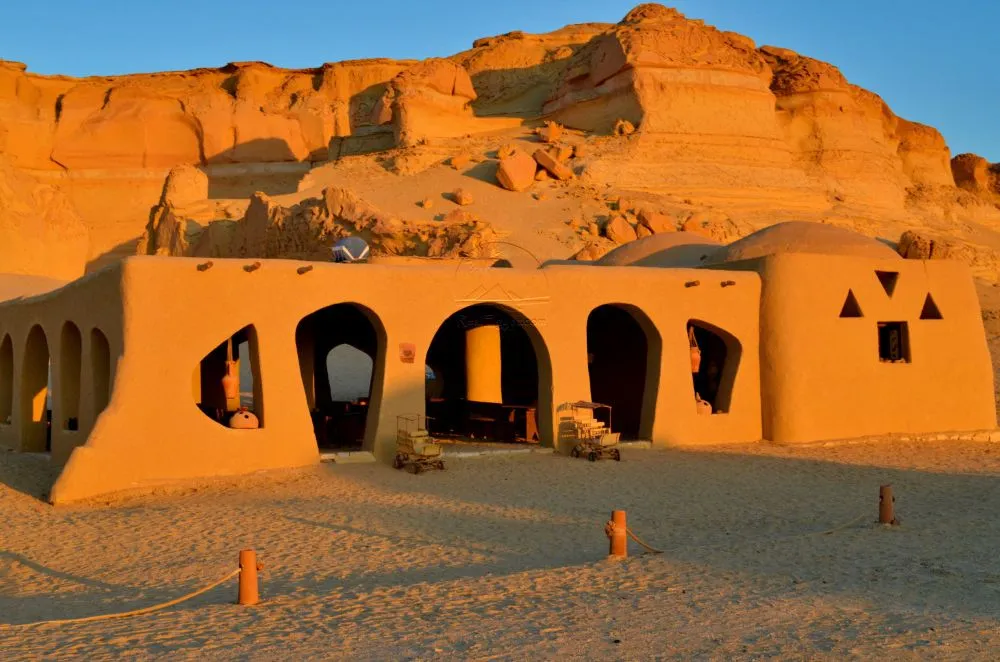
The onsite museum is an architectural marvel, built using local materials to blend seamlessly with the desert surroundings.
It houses the largest intact Basilosaurus skeleton ever found, providing a comprehensive narrative of how climate change reshaped the Earth’s geography.
As a result, visitors gain a deep understanding of how environmental shifts can lead to the extinction or evolution of entire species.
Quick Facts About Wadi El Hitan
UNESCO Status: Inscribed in 2005 as Egypt’s first natural World Heritage site.
Age of Fossils: Approximately 40 to 42 million years old (Eocene Epoch).
Location: Part of the Wadi El Rayan Protected Area in the Fayoum Governorate.
Key Species: Basilosaurus isis and Dorudon atrox.
Historical Context: The area was once part of the Tethys Sea.
Accessibility: Located roughly 150 km southwest of Cairo.
Landscape: Characterized by wind-eroded rock formations known as “mushroom rocks.”
When Is the Best Time to Visit Wadi El Hitan?
The best time to visit Wadi El Hitan is during the autumn and winter months, specifically from October to April, when the desert temperatures are mild and pleasant for hiking.
During this period, the daytime temperatures range between 20°C and 25°C, making it ideal for exploring the outdoor trails and the museum without the intense heat of the Egyptian summer.
Seasonal Considerations
Summer in the Fayoum desert can be extremely harsh, with temperatures frequently exceeding 40°C.
Visiting during the peak of summer is generally discouraged as the reflection of the sun on the desert sands can be overwhelming for hikers and researchers.
Therefore, planning your trip for the cooler months ensures a safer and more comfortable experience.
The Magic of Sunset and Nighttime
Many travelers choose to visit in the late afternoon to witness the stunning desert sunset, which turns the valley’s rock formations into vibrant shades of orange and gold.
Furthermore, Wadi El Hitan is a designated “Dark Sky” area, making it one of the best spots in Egypt for stargazing and astrophotography.
As a result, an overnight camping trip during the winter is highly recommended for those who want to see the Milky Way over the whale fossils.
How to Reach Wadi El Hitan from Cairo?
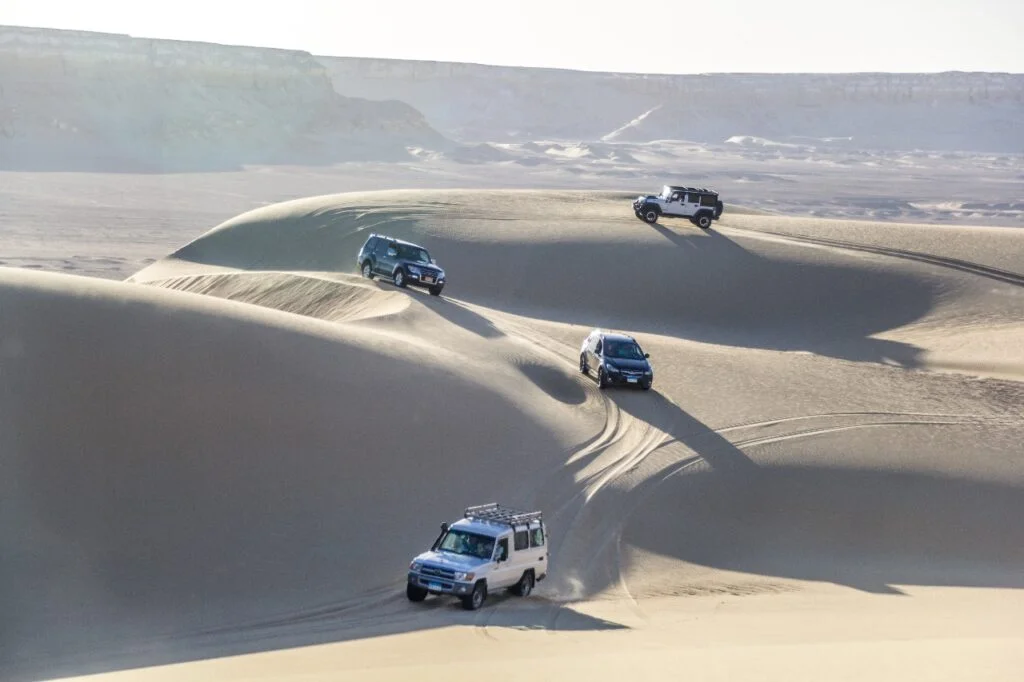
To reach Wadi El Hitan from Cairo, you must travel approximately 150 kilometers southwest, a journey that typically takes 3 to 4 hours by 4WD vehicle via the Fayoum desert road.
The final stretch of the trip involves driving through the Wadi El Rayan Protected Area on a road that transitions into a desert track, requiring a sturdy vehicle and an experienced driver to navigate the sandy terrain.
Traveling by Private Car or Tour
Most visitors opt for organized day trips or private 4WD rentals from Cairo, as public transportation does not reach the site directly.
The route passes through the scenic Fayoum Oasis and along the shores of Lake Qarun, providing beautiful views before entering the deep desert.
Because the road can be challenging for those unfamiliar with desert driving, hiring a professional guide is often the safest option.
Logistics and Permits
Visitors must pass through the main gate of the Wadi El Rayan Protected Area, where a small entrance fee is collected.
It is important to ensure your vehicle is well-fueled and stocked with water, as there are no gas stations between the main road and the valley.
As a result, many travelers coordinate their logistics through travel agencies to ensure a seamless transition from the bustling city to the quiet desert.
Why Travelers Search for Wadi El Hitan?
Travelers search for Wadi El Hitan primarily due to its unique combination of educational value, scientific mystery, and the growing trend of sustainable “slow travel” in Egypt.
The search intent ranges from researchers looking for paleontological data to adventure tourists seeking an off-the-beaten-path experience that differs from the traditional pyramid and temple tours found in Luxor or Giza.
Educational and Scientific Interest
Students and educators search for the valley to understand the tangible evidence of evolution and climate history.
The site provides a “classroom in the sand” where the effects of global warming and rising sea levels millions of years ago can be physically observed.
Therefore, the educational intent is a major driver for the high search volume surrounding fossil sites in Egypt.
The Appeal of Eco-Tourism
Modern travelers are increasingly looking for sustainable travel options that support conservation.
Wadi El Hitan represents the pinnacle of eco-tourism in Egypt, offering low-impact visitation and a focus on natural preservation.
Because of this, it has become a top destination for those wanting to experience the raw beauty of the Sahara while learning about the planet’s ancient past.
What Is the Difference Between Wadi El Hitan and Wadi El Rayan?
The main difference is that Wadi El Hitan is a specialized fossil site focused on prehistoric whale evolution, while Wadi El Rayan is a broader protected area known for its man-made lakes, waterfalls, and biodiversity.
While Wadi El Hitan is located within the larger Wadi El Rayan Protected Area, the former is a desert-focused archaeological site and the latter is a water-based recreational and ecological zone.
Features of Wadi El Rayan
Wadi El Rayan is famous for being home to Egypt’s only waterfalls, which connect two large man-made lakes at different elevations.
It is a popular spot for birdwatching, sandboarding, and swimming, attracting many local families for weekend outings.
In contrast, Wadi El Hitan is a more silent, scholarly, and contemplative site focused on deep time and geology.
How They Complement Each Other
Most itineraries include both sites because they represent the two different faces of the Fayoum landscape: the fertile and the fossilized.
Visitors often start their day at the waterfalls of Wadi El Rayan for some activity and then move to the valley for a quiet sunset.
As a result, understanding the distinction helps travelers plan a balanced itinerary that covers both natural beauty and historical significance.
Is Wadi El Hitan Suitable for Families, Students, and Researchers?
Yes, Wadi El Hitan is highly suitable for families, students, and researchers alike, offering accessible trails for children, deep scientific data for academics, and safe camping facilities for groups.
The site is designed with educational signage in both Arabic and English, making it an excellent destination for school field trips and family vacations that prioritize learning and adventure.
A Paradise for Researchers
For paleontologists and geologists, the valley is a living laboratory with millions of years of data written in the stone.
The management of the site allows for controlled research, ensuring that new discoveries are documented and preserved.
Because the fossils are so numerous, there is always more to learn about the Eocene environment and the species that inhabited it.
Family-Friendly Desert Exploration
Families enjoy the valley because the walking trails are well-marked and not overly strenuous for children.
The museum offers interactive displays that explain the whale’s evolution in a way that is engaging for younger audiences.
Consequently, it has become one of Egypt’s most recommended destinations for families looking to escape the city and engage with nature.
Travel Tips Before Visiting Wadi El Hitan
Wear Sun Protection: Even in winter, the desert sun is strong; bring hats, sunglasses, and high-SPF sunscreen.
Dress in Layers: Desert temperatures drop significantly after sunset, so bring a jacket if you plan to stay late.
Stay on the Paths: To protect the fragile fossils, never walk off the designated trails or touch the skeletons.
Bring Water and Snacks: While there is a small cafeteria near the museum, it is best to carry your own supplies.
Photography: The light is best during the “Golden Hour” (an hour before sunset) for capturing the texture of the rocks and fossils.
Respect the Environment: This is a zero-waste site; ensure you carry all trash back out with you.
How Can Desert Cruise Travel Help You Plan Your Trip to Wadi El Hitan?
Planning a trip into the deep Western Desert requires logistics that can be difficult for the average traveler to manage alone.
Desert Cruise Travel specializes in crafting bespoke journeys to Wadi El Hitan, ensuring that your visit is both educational and comfortable by handling every detail from transportation to expert guidance.
Comprehensive Trip Coordination
The team at Desert Cruise Travel can help you organize a full-day or multi-day itinerary that seamlessly combines the whale fossils with the waterfalls of Wadi El Rayan.
They provide high-quality 4WD vehicles and professional drivers who are experts in navigating the shifting sands of the Fayoum desert.
Because they understand the nuances of the region, they can time your visit to avoid crowds and maximize your experience of the desert’s natural beauty.
Specialized Guidance and Activities
Beyond just transport, they offer access to guides specialized in natural history who can explain the complex evolution of the fossils in detail.
For those interested in more than just sightseeing, they can arrange professional photography sessions, luxury desert camping, and guided stargazing tours.
As a result, your trip becomes more than just a visit; it becomes a deep dive into the prehistoric heart of Egypt.
Wadi El Hitan over night
An overnight stay at Wadi El Hitan transforms a scientific excursion into a profound celestial experience, as the valley is one of Egypt’s premier “Dark Sky” locations with minimal light pollution.
Spending the night allows you to witness the dramatic transition of the desert landscape, from the golden hues of sunset illuminating the prehistoric whale skeletons to a canopy of stars so dense that the Milky Way is often visible to the naked eye.
Because the site offers a dedicated, eco-friendly camping area, visitors can enjoy a traditional Bedouin-style dinner by the fire before retreating to tents set against the silhouettes of ancient “mushroom rocks.”
As a result, waking up to the silent, crisp desert dawn provides a rare opportunity to explore the fossil trails in total solitude before the day-trip crowds arrive from Cairo.